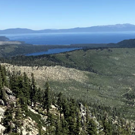
An ecological modeling study from the University of California, Davis, found that 7% to 16% of global plant species studied are expected to lose more than 90% of their range, facing a high risk of extinction by 2100 under current climate change projections.
Every dollar spent on forest fuel treatments saves about $3.75 in wildfire damages, according to a new study, led by researchers at the University of California, Davis,
Salicylic acid, the active molecule in aspirin and some acne medications, is a plant hormone essential for immunity, but it’s a double-edged sword: too much can cause autoimmunity and stunt growth.
The National Academy of Sciences has elected Jeffrey Ross-Ibarra, professor in the Department of Evolution and Ecology at the University of California, Davis, as a member.
California has one of the highest rates of wildfire-driven deforestation in the world, and the trend has accelerated over the past three decades, according to a study from the University of California, Davis.
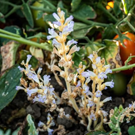
California’s processing tomato industry agreed to voluntary equipment cleaning and notification guidelines to prevent the spread of branched broomrape, a parasitic weed that attaches to roots and sucks out key nutrients.
A team of scientists sequenced the genome of the Great Basin bristlecone pine, a step that could help unlock the secrets behind this tree’s exceptionally long life and provide insights for other species.
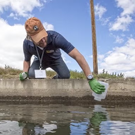
A major five-year study on California’s Central Coast, led by the U.S. Food and Drug Administration and the University of California, Davis's Western Center for Food Safety, is helping scientists better understand how harmful bacteria move through the environment.
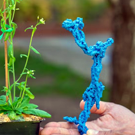
Augmin is a protein complex that binds to microtubules, the cell’s internal skeleton, aiding in the formation of branched microtubules and playing a key role in cell division.
Venkatesan Sundaresan, a Distinguished Professor of plant biology and plant sciences at the University of California, Davis, has been awarded a Gates Foundation grant to develop self-cloning crops for Indian farmers.
When pistachio hulls split before the nuts are harvested, insects and fungi can get inside, damaging the nuts, costing farmers money and contaminating the nuts.
The University of California, Davis, has reached new agreements to license more than a dozen of its world-renowned strawberry varieties to growers in countries across the world.